
Driving the Same Okinawa Roads Again in a Different Season: Where Groups Tend to Stumble and How to Avoid It
Driving the Same Okinawa Roads Again in a Different Season: Where Groups Tend to Stumble and How to Avoid It
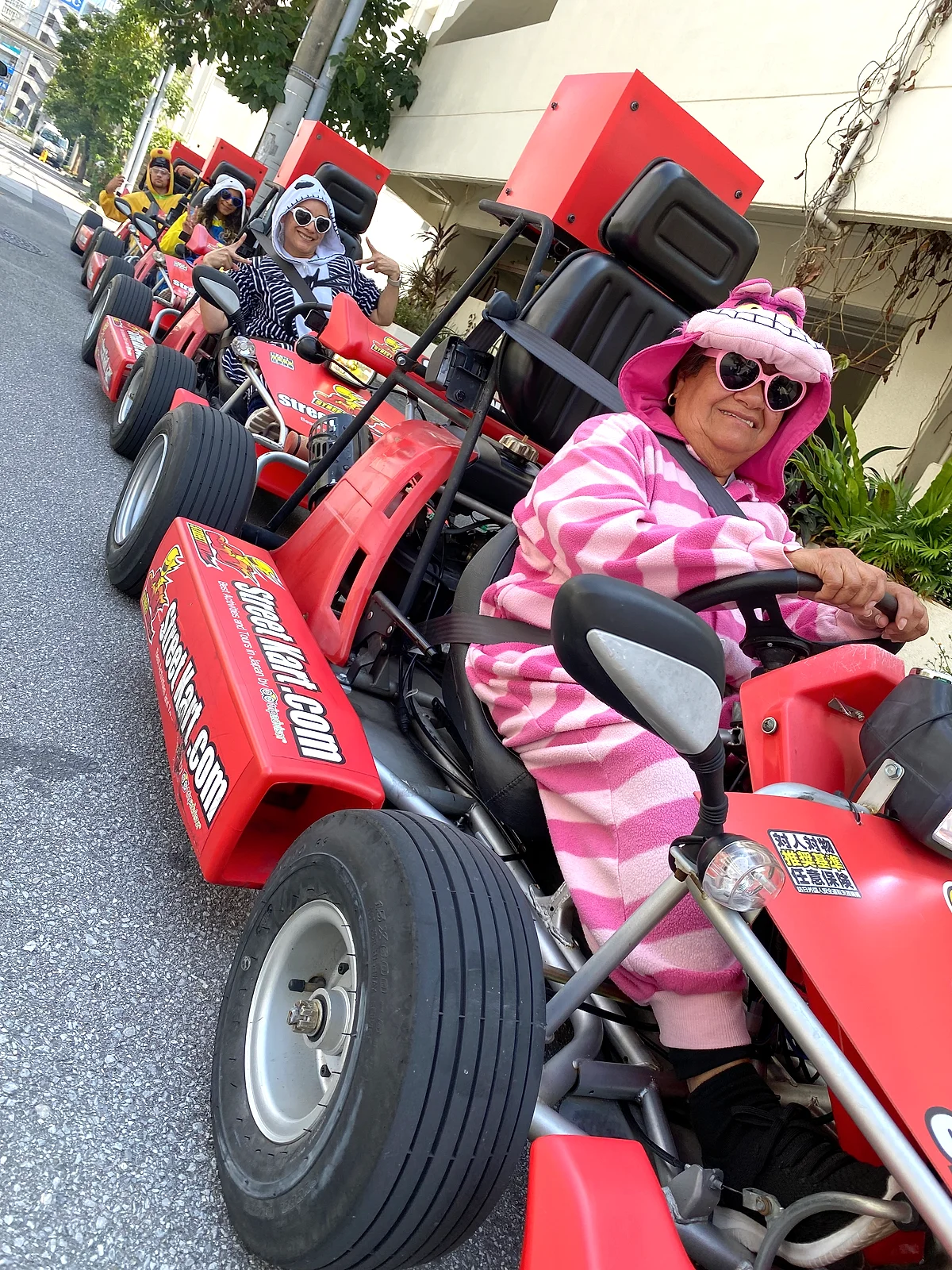
A breeze carrying the smell of the sea brushes across your cheeks. The streets of Naha slip away behind you, and the ocean shows itself in the gaps between buildings. As you follow the guide's kart, the low roar of an airplane reaches you from the direction of the airport. You feel it shake your chest before you really hear it.
Street Kart in Okinawa runs guided tours, and each location has its own set course. If you'd like the same course as last time, check the route with the official booking contact when you reserve. The angle of the sunlight, the temperature of the wind, the depth of the ocean's blue: all of these change with the seasons. If your group has promised to "come back in a different season," keeping that promise takes some planning. Below, we go through the mistakes larger groups tend to make and how to avoid them.
Why Would You Want to Drive the "Same Road" Again?
The Okinawa tour passes through central Naha, home to the Okinawa Prefectural Government building and Naha City Hall; the area around Kokusai-dori, the city's main tourist street; a coastal route lined with blue sea; the area around Naha Airport, where you can watch planes take off and land; and Senagajima, an island of white buildings set against emerald-green water. City, sea, airport, and island all come together on a single route. On your first ride there may be so much to look at that you spend the whole time just trying to keep up with the scenery. That's where the fun of a second ride begins.
The second time, you're still following the guide, but you have a little more room to look around. The color of a shopfront you missed before, the shadow of a tree falling across a street corner, the moment just before the coastal road when the sky suddenly opens up. Because you've driven the road once, you start to notice more.
With your hands on the wheel, the sounds of the city and the wind seem to reach you directly, without even a pane of glass in between. The bustle of Kokusai-dori while you wait at a red light. The wind that suddenly grows heavier the moment you reach the coast. Near the airport, the roar of jet engines that seems to push the air itself apart. The scenery stops being something you look at and becomes something you feel on your skin. So when the season changes, the same places give you something different.
Summer in Okinawa brings strong sunshine, and on the coast the glare off the water reaches deep into your eyes. The line between sky and sea is so sharp it looks drawn with a ruler, and the "Okinawa blue" you've seen in photos is right there in front of you. In winter, some days bring wind from the north, and the same coastline feels cool. With the light softer, the sea can look a shade more muted. Neither season is better than the other.
"Umikaji," as in Senaga Island Umikaji Terrace, the shopping complex on Senagajima, is the Okinawan word for sea breeze. That sea breeze is probably what feels most different from season to season. In summer it's humid, with a weight that clings to your skin. In winter it's dry, with a thin chill that slips in through your sleeves. You may pass the same island, but the temperature you remember will be different each season.
Four Common Stumbling Points When a Group Returns in a Different Season
Traveling solo, you just go when you can. Groups don't work that way. Time off work, flight times, everyone's own itinerary: the bigger the group, the more often one person's schedule holds everyone up. The first thing to do is pick one organizer. Collecting possible dates, reminding everyone to check their licenses, contacting the shop to book, sharing the meeting place: just handing these to one person cuts down a lot on miscommunication. Here are the points the organizer should pay special attention to.
Booking: Insisting on Weekends Until No Date Works for Everyone
This is the most common one. Once you decide "let's go on a weekend when everyone's off," your options shrink fast. Weekend slots at Street Kart tend to fill up, so if you want a weekend, book early. Check the official website to see whether your group size and dates can be booked. Have several possible dates ready, including weekdays, and get in touch early.
Bookings are accepted via Facebook, LINE, and email. Contact details are all on the official website, so things go smoothly if the organizer handles communication from there. If you have questions about how the day will go or how the tour runs, don't guess. Check the official website and let the group know ahead of time.
Setting a deadline for confirming headcount also makes things easier later. Cancellations are free up to 7 days before, so if you tell everyone "we'll lock in the final number the day before the 7-day mark," no one has to panic if someone's plans fall through. Double-check the cancellation terms in the official information when you book. With a deadline in place, people who kept saying "I'm not sure yet" find it easier to give an answer. In group planning, that one line makes a big difference.
Licenses and Language on the Day: "It Was Fine Last Time" May Not Hold
When you come back for a second ride in a different season, driver's licenses can be an unexpected pitfall. Even if someone drove without any problem last time, that doesn't mean their license is still valid or that they have everything they need this time. If you find out on the day that one person can't drive, the rest of the group either rides while they wait or everyone waits, and either way it's a hard time for all. The required licenses and documents are listed on the official driver's license information page, so each member should confirm they can drive on their own license. It's a good idea for the organizer to wait until everyone has replied "checked" before confirming the booking.
It's also worth a reminder while everyone is packing. According to the official information, you need your original physical license, and digital licenses are not accepted. A photo saved on your phone won't work either. Just asking "Is your original license in your wallet?" in the group chat the day before you leave can save someone a moment of panic at check-in. See the information page above for full details.
Prepare for language as well. Tour guidance on the day is basically in English. Guidance in Japanese or other languages depends on the staff working that day and isn't guaranteed. If anyone in the group is unsure about their English, have someone who's comfortable with it stay nearby and put the explanations into simpler terms. You can also ask about any concerns in advance through the official website. The more languages your group speaks, the more it helps to pick one person as interpreter. It makes the mood before departure a lot more relaxed.
Seasons: Preparing for Winter the Same Way You Did for Summer
Last time was summer, and this time it's winter. The usual mistake here is choosing clothes and gear based on how it felt last time. In summer, sun protection is essential. Reapply sunscreen before you head out and drink water regularly before and after the tour. These are basics, but they make a real difference in how you feel once you're done driving.
Another thing to watch in summer is your footwear. Don't head to the shop in the sandals you wore at the beach. The official information recommends closed-toe shoes, ideally sneakers. If you're stopping at the beach that day, toss a pair of sneakers in your bag just in case.
In winter, don't underestimate the wind. There's little to block it along the coast, and it can feel colder than when you're walking around town. Bring a jacket you can easily take on and off so you can adjust on days when the weather is hard to predict. The official website has guidelines on what to wear, so read through them once before you go. Even just looking back at photos from last time and chatting about how "it was cold" or "it was hot" counts as real preparation. The light in a photo is often enough to bring back how the air felt on your skin.
If the season you pick overlaps with the rainy season or typhoon season, you'll need to think about the weather too. Raincoats are provided on rainy days, but whether the tour goes ahead depends on the official guidance. Settle on one backup plan for bad weather so nobody's mood sinks. Kokusai-dori and the Makishi Public Market are within walking distance of the shop, which makes them easy rainy-day options.
Tours may also be canceled due to heavy rain or typhoons. If that happens, will you reschedule and try again, or switch to something else for the day? Agree on a group policy before you leave so you don't end up stuck on the day with everyone wanting something different. Check the official information for how cancellations are handled.
Before and After: Overpacking the Schedule and Arriving Late
A common group mistake is cramming too much into the time before the tour. "Play at the beach, then head straight to the karts" sounds great, but changing and getting there take longer than you'd think. On top of that, the shop has no parking. Plan to use public transportation and arrive with time to spare. In a large group, one person running late makes everyone late. The trick is to set the meeting time a little early.
Before you set off, there's check-in and a safety briefing covering how to operate the karts and what the route is. Listening calmly is much better than rushing in out of breath, and it leaves you more relaxed once you start driving. Don't tune it out just because it's your second time. Listen as if it were your first.
Pay attention to luggage, too. The shop's lockers are meant for small items and won't fit large luggage like suitcases. If anyone is coming straight from the airport, plan for them to drop their bags at the hotel first and then meet up. Keep whatever you carry in a small bag that fits on the kart.
The shop is in Naha, with plenty of easy places to visit nearby. Kokusai-dori and the Makishi Public Market are about a 10-minute walk away, Yachimun-dori, a street lined with pottery shops, is about 15 minutes, and Naminoue Beach is about 20 minutes. After the tour, you could split into a "let's eat at the market" group and a "let's look at pottery" group, then meet up again on Kokusai-dori. Not everyone wants to see the same things. If you plan on splitting up and regrouping from the start, agreeing on plans gets much easier.
You might also change where you go depending on the season. In summer, after the ride, head to Naminoue Beach and gaze at the sea while it still holds the day's heat. In winter, take your time browsing the pottery shops on Yachimun-dori. What color does the glaze on a bowl in your hands take on in soft winter light? Change how you spend the time before and after, and the whole trip feels different.
If you want to capture the difference between seasons, put a little thought into your photos. Using your phone while driving is dangerous, so take pictures before or after the tour. Senagajima is a great spot. The tour passes by it, but it's also only about 15 minutes from the shop by car, so you can come back at another time. Photograph the white buildings of Umikaji Terrace and the sea from the same angle and the same spot. Shoot the same composition next season, and just putting the two photos side by side shows at a glance how the shadows on the white walls and the blue of the sea have changed. On Instagram, post them together as a multi-photo post; on TikTok, make a short video that switches between the two. If you choose a hashtag just for your group, like "#SameRoadFourSeasons," it's easier to gather everyone's posts later. And if you hold a Blue Seal ice cream in every shot, it becomes a little tradition you can keep up from season to season.
Next Season's Promise Starts with One Message from the Organizer
A trip to drive the same roads again in a different season rarely happens if it stays a vague promise. The first step is simple. The organizer just sends everyone: "Check that you can drive on your license" and "Tell me which dates work for you, weekdays included." Once everyone has replied, get in touch via Facebook, LINE, or email. Weekends tend to fill up, so if you want a weekend, move early. Contact details and the latest tour information are on the Street Kart official website.
Once the booking is set, send one more message a few days before the trip: "Bring your original physical license," "Wear closed-toe shoes," "Leave large luggage at the hotel." Sending just these three lines makes it much less likely that anyone gets held up at check-in.
Try sending the Senagajima photo from last time to the group chat again. The sea on the screen is frozen in the colors of that day's light. The next photo you put beside it will have colors no one has seen yet. A different season's wind is waiting for you.
This article was originally written in Japanese and translated using AI. Some expressions may read unnaturally, and we appreciate your understanding. For the most accurate and up-to-date information, please refer to the official site at kart.st.
Street Kart is not affiliated with Nintendo or the Mario Kart series in any way. We do not provide costumes of Nintendo characters, and such costumes may not be worn during tours even if brought by participants.